


The City of Rats: When Urban Life Becomes an Ecosystem for Disease

Updated: Jun 13

The night shift vendor noticed it first in the silence between customers. A sack of maize, carefully stacked, carefully counted, had shifted. Not fallen. Not spilled. Shifted, as if something small and determined had worked through it grain by grain. By morning, half the stock was gone.
No broken lock. No forced entry. Only the faint, unmistakable trail of something that had already disappeared into the city before dawn. Whatever had done this had been here all night. And it would be back.
In many urban markets, this is no mystery at all.
This is simply Tuesday.

🏙️ A city that never truly sleeps
In rapidly growing urban centres like Accra and many similar cities across West Africa, rodents have become an invisible second population. They are part of the infrastructure; uninvited, unacknowledged, but deeply embedded in the daily rhythm of the city.
They move through open drains that double as highways, overcrowded markets where food is never fully secure, cracked foundations of ageing buildings and waste dumps that are never truly cleared, with a fluency humans rarely notice until something goes wrong. To most residents, they are rarely seen in full daylight. But their presence is measured in absence; missing food, disturbed storage, gnawed packaging, and the quiet normalisation of “we have to protect everything.”
The city has not eliminated rats.
It has trained them.
“The rats are not outside the system.
They are a product of it.”
🐀 The biology of success

Rats are not invading cities. They are evolving with them.
Where humans produce waste, rats find abundance. Where infrastructure creates gaps, rats find shelter. Where food systems are inefficient, rats find opportunity. They are among the most successful urban-adapted mammals on Earth, not because they are aggressive, but because they are flexible.
Their success is not accidental; it is biological efficiency shaped by human behaviour.
1. Reproductive speed
A single pair can produce multiple litters per year, each capable of reaching maturity in weeks.
2. Behavioural intelligence
Urban rats learn. They avoid traps, recognise danger patterns, and adapt feeding routes based on human activity.
3. Dietary opportunism
There is almost no organic material they cannot use for survival; grain, waste, leftovers, refuse.
In ecological terms, cities function as continuous, high-density resource zones.
For rats, that is not survival.
That is abundance.
In ecological terms, the modern city is not hostile to rats.
It is optimal.
🧍 The human cost of adaptation
But what thrives in one system often strains another. For the people who live inside this system, the consequences are not abstract. They are immediate.
A market vendor may lose a portion of stored goods overnight. A household may discover contamination in food kept in poorly sealed containers. A small shop may quietly absorb losses into already thin profit margins.
But beyond economics, there is something harder to measure:
The constant vigilance over food storage
The unease of shared space
The quiet normalisation of infestation
In some communities, it becomes part of urban life, like traffic, noise, or unreliable water supply. Present. Persistent. Unresolved. And beneath these visible impacts lies a quieter, more dangerous layer.
Disease.
⚕️The One Health reality beneath the surface
Rodents in urban environments are more than a nuisance; they are part of a public health interface. They are associated with disease pathways such as leptospirosis and salmonellosis, particularly in environments where sanitation systems and human living spaces overlap.
But the bigger risk is not the pathogen alone. It is connectivity. When waste systems, housing conditions, and human behaviour align with rodent ecology, the result is a stable transmission network.
This is One Health in its most visible form:
Human systems create ecological niches.
Animal populations respond and stabilise within them.
Disease emerges where the two overlap.
“This is not a rat problem.
This is an urban design problem.”
🏗️The limits of control
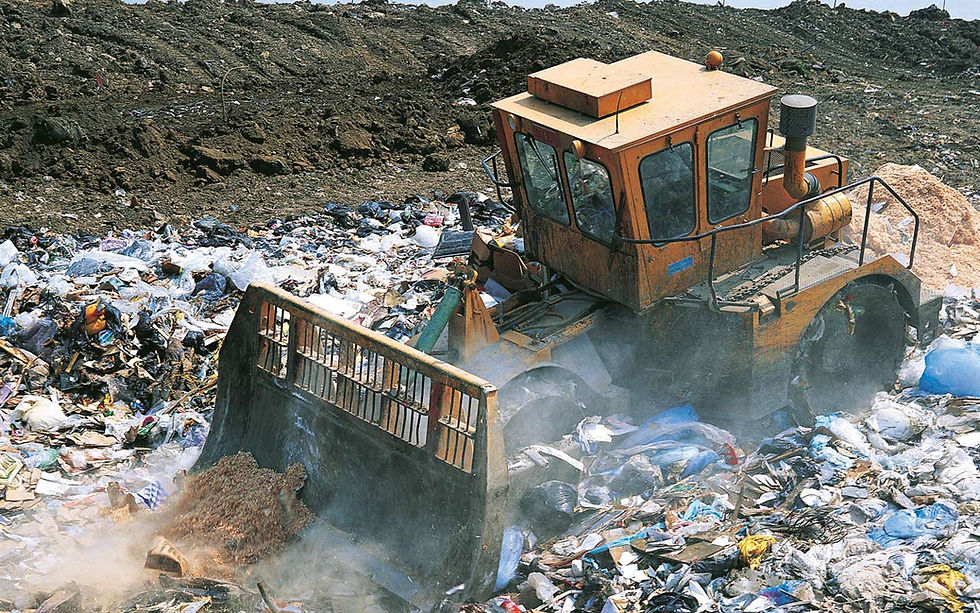
Traditional responses often rely on visible interventions:
Poisoning campaigns
Trapping programs
Reactive sanitation drives
These measures can reduce populations temporarily but rarely change the underlying conditions.
Because the issue is not rodent presence.
It is environmental design.
Without addressing waste management, structural integrity, and urban planning, control becomes repetition rather than a solution. The system resets itself.
🌙 The city beneath the city
As night falls, the visible city quiets. Lights dim. Markets close. Movement slows. But beneath it, another rhythm continues; steady, adaptive, invisible.
A network of tunnels, drains, walls, and corridors becomes active. Not chaotic. Efficient.
The city does not sleep alone.
It shares its darkness.
The question is often framed as how to get rid of rats. But the more difficult question is: What kind of city produces them so consistently? Because in the end, the rats are not outsiders pressing in. They are residents of a system that was never designed to exclude them.


Comments